
Coop Building
The Complete Beginner's Guide to Building Your First Chicken Coop
Everything you need to know about materials, tools, and dimensions when building your very first backyard chicken coop from scratch.
Read More →

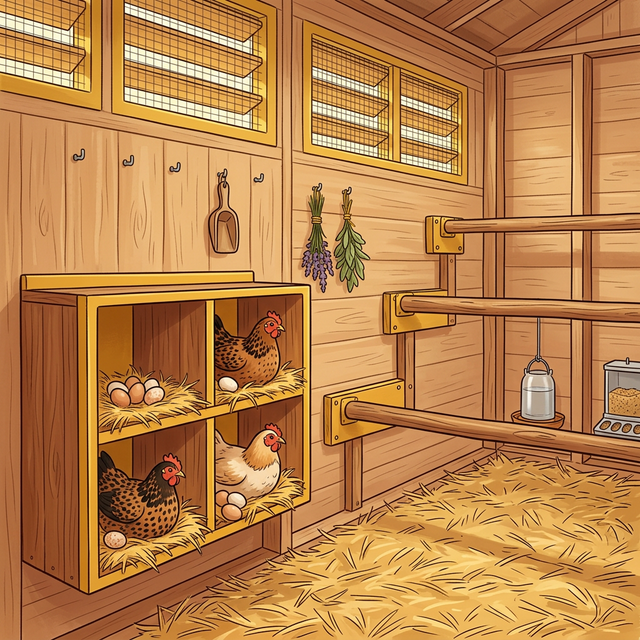
At Chicken Coop Calculator, we believe every backyard flock deserves a safe, comfortable, and correctly sized home. Whether you're a first-time chicken keeper or an experienced farmer expanding your flock, our tools make coop planning simple and accurate.
Our calculations are based on established poultry husbandry guidelines from agricultural extension services, ensuring your chickens have the right amount of space for their health and productivity.
Everything you need to plan, build, and maintain the perfect chicken coop and run area.
Learn exactly how many square feet of indoor coop space each chicken needs based on breed, climate, and flock dynamics.
Outdoor run dimensions, fencing requirements, predator-proofing tips, and how free-range access changes your calculations.
From Bantams to Brahmas, every breed has unique space requirements. Find specific guidelines for the breeds you keep.
Proper air flow, nesting box placement, roosting bar height, and interior layout tips for a healthy flock environment.
Enter your flock details below to get personalized space recommendations instantly.
Get accurate space requirements based on your flock size and breed.
Key facts every chicken keeper should know before building a coop.
Standard-size chickens need at least 4 square feet of coop floor space each. Overcrowding causes stress, feather pecking, and reduced egg production.
Outdoor run areas should provide at least 10 square feet per chicken. More space means happier chickens and less ground damage from scratching.
You don't need a nesting box for every hen. Chickens naturally share, and 1 box for every 3-4 hens is the recommended standard for optimal laying.
Chickens sleep on roosting bars. Standard breeds need 8-10 inches each, while larger breeds may need up to 12 inches of roosting bar space.
Proper ventilation prevents moisture build-up, ammonia, and respiratory disease. Aim for 1 square foot of ventilation per 10 sq ft of floor space.
Use hardware cloth (not chicken wire) with openings no larger than ½ inch. Bury wire 12 inches deep around the run perimeter to deter digging predators.
Hear from backyard chicken enthusiasts who've used our calculator.
Tips, guides, and inspiration for chicken coop planning and backyard poultry keeping.
Everything you need to know about materials, tools, and dimensions when building your very first backyard chicken coop from scratch.
Read More →
From friendly Orpingtons to prolific Leghorns, discover the best breeds for beginners and how much space each one requires.
Read More →
Limited yard space? These creative design tips will help you give your chickens a comfortable home even in a compact backyard setup.
Read More →